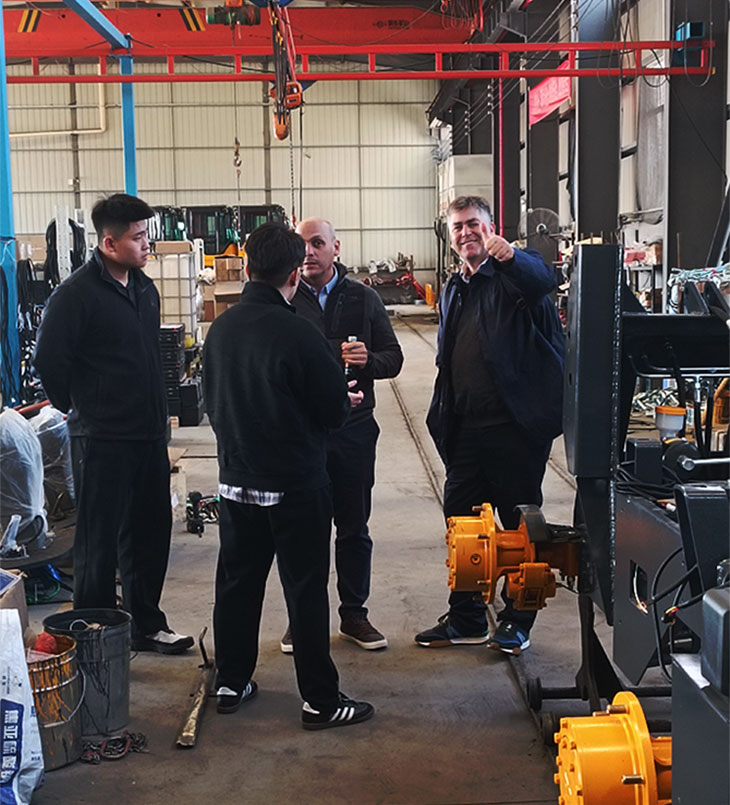
Quality control is carried out throughout the manufacturing process. Our production and inspection procedures cover key components, assembly, hydraulic and electrical systems, machine performance, and final inspection before shipment. Each machine is checked before delivery to ensure it meets the agreed specifications.
Yes. We provide spare parts support and technical after-sales service for our machinery. We can supply commonly used spare parts and provide technical guidance to help customers maintain their equipment and reduce downtime.
The production lead time depends on the machine model, configuration, and order quantity. Each model has a production capacity of at least 150 vehicles per month. After confirming the specifications and receiving the order, we will provide a clear production schedule. Delivery time depends on the destination and shipping method. Our team will keep customers informed throughout the manufacturing and delivery process.
Yes. Our products are currently exported to over 80 countries and regions. We can provide different engine and configuration options according to the emission standards and regulations of the destination market. Before placing an order, our technical team can confirm the applicable requirements and recommend a suitable configuration for your country.
Yes. We provide OEM and customized engineering machinery solutions according to customers’ requirements. We can customize machine configurations, engines, hydraulic systems, attachments, colors, logos, and other specifications based on the working environment and market requirements.
We are a professional manufacturer with 20 years of experience and our own factory in China. We have our own production facilities, engineering team, quality control system, and after-sales service team. By working directly with us, customers can communicate directly with the manufacturer and enjoy competitive factory-direct prices.
No. New cars usually have a break in period of about 60 hours (also known as the running in period). At this stage, the surface of the parts is still relatively rough and requires gentle use. If overloaded from the beginning, it will accelerate the wear of parts and even cause early damage.
Drivers must be certified to operate, requiring not only a formal forklift operation qualification certificate but also internal safety training and assessment by the employing unit.